
Multiple Urbanisms - bayCHINA Project
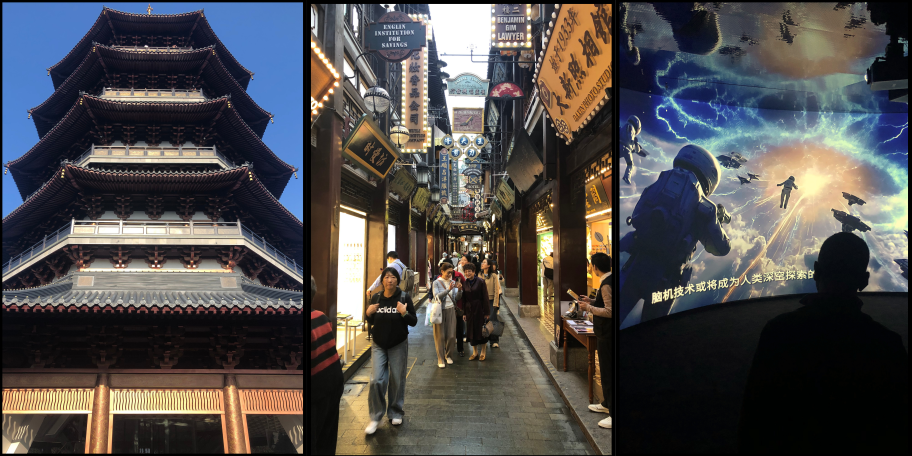
Subjects/themes: Urban-rural interface: rural revitalisation/ smart urbanism/ revitalisation of urban brownfields in industrial districts
Scientific Cooperation between Zhenjiang Univ./China and UBT Bayreuth/Germany (BayCHINA) from 2025 - 2027
Europe and China differ significantly in terms of their paths to medernization and urban development. Urbanization, which has been used to describe the process of urban modernization in Europe sice the beginning of the 20th century (both quantitatively and qualitatively), has long since spread to China. However, the speed and scale of this process has reached breathtaking proportions there, far exceeding European dimensions. And while this process has slowed considerably in Europe over the last half-century and has been accompanied by a substantial suburbanization, China has achieved ihts strongest economic and thus also urban growth during this very period. The economic reforms since the 1970s and the gradual opening up to the world market have made China a big player in the global economy, whose hubs are located in the major cities, mainly (but not exclusively) in the coastal regions. While European cities became "denser" during this period (in accordance with urban planning models) in order to save space, the opposite becames true in China: urbanization is mainly driven by an immense urban growth and urban sprawl.
This has an impact on the form and content of urban development, i. e., which social formations arise or undergo change in the urban context. For Europe, the city was the laboratory and context for the emergence of modern society. This also applies to China, but there is a different path to modernization in the sense of "multiple modernities" (Eisenstadt): China´s path as an important player in the global economy since the 1070s can be described as a "different modernity" because it did noch follow the Western path. The collaboration with Chinese partners aims to shed light on this form a comparative perspective and develop an in-depth exchange with Chinese colleagues. In addition, Chinese urbanism far exceeds European urbanism in terms of scale and intensity and thus transform Chinese society in a very fundamental way. With this international, comparative perspective, the project collaboration with Chinese partners aims to examine two different trajectories of urbanisation as respective parts of social modernisation. The project "Multiple Urbanism" will select one or two case studiex in China and Germany (Bavaria) to reflect and compare the local-regional trajectories and qualitative dimensions of both "urbanisms". The Chinese-German-Working Group therefore wants to analyse the outcomes of this develpment in a comparative perspective. As both countries experience a supposedly deep change in urban-rural-relations we want to look at these developments as "new urban-rural interfaces" which emanate from recent changes.
- Main fields of comparison - Similarities and differencesEinklappen
-

- Pace and Scale of Urbanization
China´s urbanisation is characterised by extremly rapid, large-scale growth, with the creation of vast new urban areas and significant population shifts from rural spaces to cities. In contrast, European urbanisation has been more gradual, genealogical process, with a higher proportion of existing, smaller cities and a focus on re-densification and transformation rather than entirely new development. The longue durée (F. Braudel et al.) of European cities and societies stands against some more disruptive developments in China since the 1960ies, which also led to a rapid change of the urban morphology and appearance.
- Governance and Planning
China typically employs a top-down approach in large-scale urban planning and development, though new forms of multilevel and network governance are emerging. Europe´s planning system is more comprehensive and systematic, incorporating more varied stakeholders and emphasizing collaborative governance for issues like urban biodiversity and climate change or societal inclusion (diversity management). This makes it slower to initiate change, but claims to be more aware of different stakeholders.
- Urban Development Focus
European urban regeneration often involves detailed regeneration programs for existing city structures, while China´s urban transformation tends to the creation of entirely new cities and/or districts on a massive scale. Cities are not transformed as much as they are created or produced as projects of societal and economic innovation.
- Emergence of New Governance
Both regions are facing a diversification of actors and a shift towards new modes of governance, including network and multilevel models, to address complex challenges like climate change. Thus there are core differences (as well as some similarities) that are in the focus of our comparative approach.
- Methods of Comparison
Comparative urbanism uses interdisciplinary approaches, drawing from philosophy, anthropology, geography, and sociology to understand how urbanism develops. We compare aspects like governance structures, economic impacts, and sustainability practices to understand the diverse way cities are shaped and transformed in globalisation.
- Research questions and field of investigationEinklappen
-

- What are the constitutive dimensions of Chinese and European Urbanism?
- Which are the pathways and historical trajectories of Chinese and European cities to modernisation and globalisation?
- What are the different modes of urban governance that guide city development and planning in both contexts, from top-down-planning to self-organisation?
- Focussing on urban neighbourhoods: How differs the logics of every-day life in cities?
- Which kind of comparative methodologies and methods are useful for social science investigations?
- Expected outcomes and scientific contributionEinklappen
-
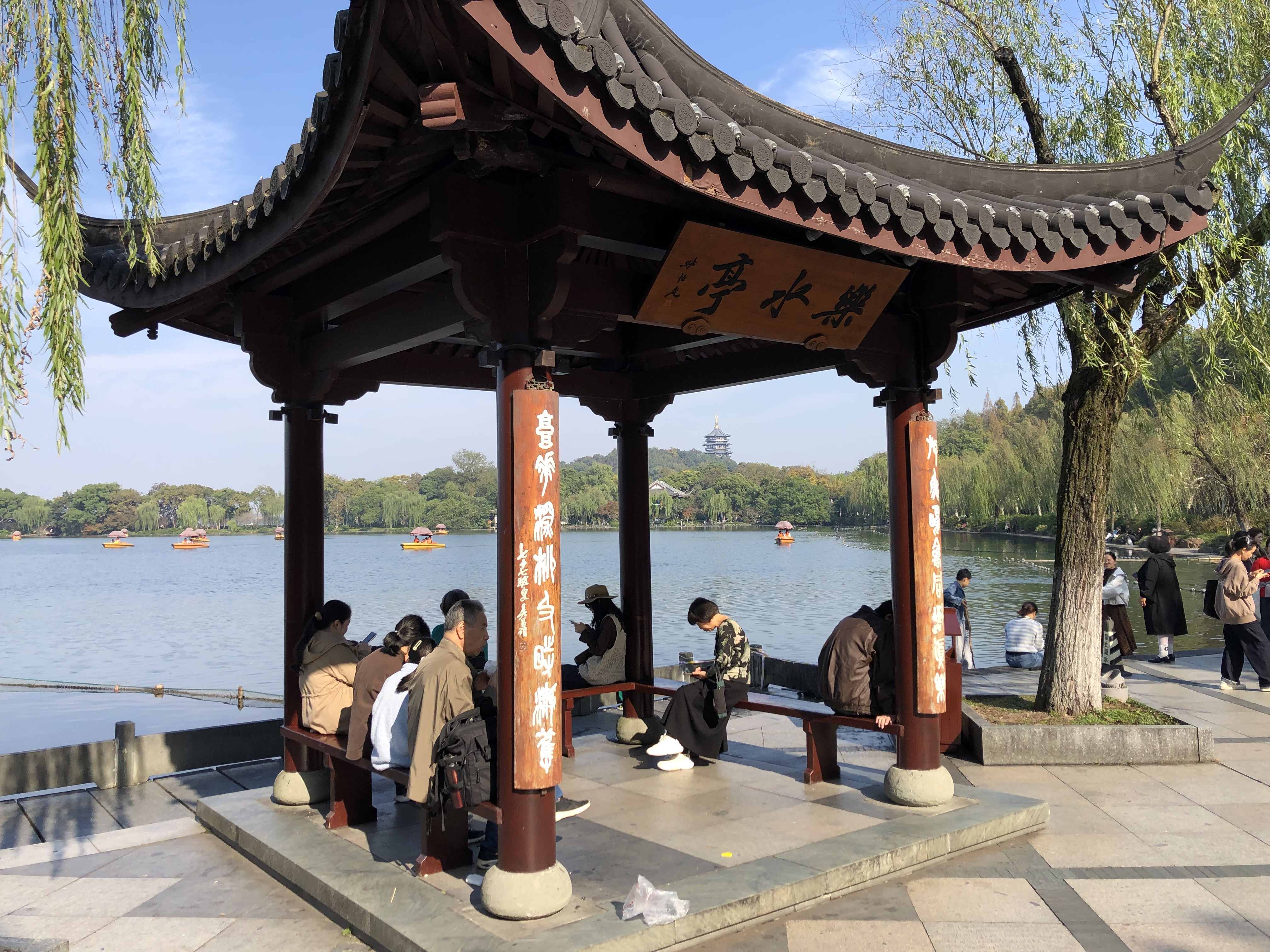
Fostered and deepened exchange and knowledge transfer with international partners to develop a comparative scale for understanding the ‘culture’ of modernisation in different social, economic and spatial backgrounds. The current state-of-the-art in urban research (especially in urban geography and sociology) lacks comparative perspectives on Chinese and European urbanism in a deep societal and structural understanding.
- Perspective UBT BayreuthEinklappen
-
Thesis 1 (Floris Maier): Rural Revitalisation & creativity at the urban-rural interface
Rural (re)vitalisation is not mainly boosted by governed land management, but as socio-ecological revival and the built environment flanked by consolidating strategies which lead to changes in the social structure. As a consequence, new life-styles, milieux and mentalities as patterns of rural change emerge and frictions between urban and rural dwellers may occur based on a diverging habitus. Some scholars even discuss this as rural gentrification« (Zwęglińska-Gałecka 2021, Li/Zhang 2024 et al) shifting sub- and peri-urban areas fundamentally.
To strengthen the analytical depth of the thesis, rural revitalisation should not only be analysed as a socio-cultural or lifestyle transformation, but also as an outcome of institutional reconfiguration. In the Chinese context, changes in land use, population structure, and rural amenities are deeply embedded in collective land ownership, village governance, and state-led policy instruments.
Key questions to address:
- How do village collectives, local governments, and external investors interact in shaping rural revitalisation?
- What formal and informal institutions regulate access to land, housing, and rural resources?
- How does state involvement differentiate rural revitalisation from market-driven rural gentrification observed in Europe?
Integrating remote sensing and POI data with institutional analysis will allow the thesis to connect observable spatial change with the governance mechanisms behind it.
Thesis 2 (Adrian Müller): Challenges of »Smart Urbanism« in Hangzhou
Smart urbanism refers to integration of digital technologies, data platforms, and connectivity systems into urban planning and city governance. The implementation of AI and the linking of huge amounts of data promise great synergy effects in cities, especially for urban planning and the quality of life of citizens. There exists a huge amount of literature on ups and downs of smart technologies such as AI, sensors, cameras, etc.., but little attention is being paid to the changing governance landscape that accompanies the integration of smart technologies in the city. This fundamental Change in governance incorporates risks "especially in instances in which these tools are involved in decision-making processes that don’t have right or wrong mathematical answers but involve inherently political and policy questions" (Arcila 2022).
A case study of the city of Hangzhou and its Hangzhou City-Brain Initiative (HCBI) should provide insights into the structural changes between the state, private tech firms, and citizens. Through a social network analysis (quantitative), changes in the processes of urban planning and decision-making should be made visible. Additionally, mapping smart technologies in certain districts could show different spatial distributions of “Smart Urbanism” in Hangzhou. Besides the theoretical analysis, which merely concentrates on institutional changes, SNA and mapping provide methods that could be compared with other case studies (comparison China – Germany).
- Team Members of Multiple UrbanismsEinklappen
-
Prof. Dr. Eberhard Rothfuß
Chair of Social and Population Geography - University of Bayreuth
Prof. Dr. Rong Tan
School of Public Affairs - Zhejiang University
Dr. Thomas Dörfler
Assistant Professor at the Institute of Geography - University of Jena
Dr. Wu Xiao
Assistant Professor - School of Public Affairs - Zhejiang University
Floris Marie Maier
Master Student “Human Geography. Urban and Regional Research” - Geographical Institute - University of Bayreuth
Adrian Mueller
Master Student “Human Geography. Urban and Regional Research” - Geographical Institute - University of Bayreuth
Yi Hang
PhD-student - School of Public Affairs - Zhejiang University
Pu YunBei
Master-student - School of Public Affairs - Zhejiang University